

If you run a small business in Nigeria — whether you sell clothes on Instagram, supply foodstuff wholesale, or own a salon in your area — then registering your business with CAC is one of the most important steps you can take. Many traders postpone it. Some are simply confused about where to start. But the truth is, registering your business with the Corporate Affairs Commission (CAC) is simpler than you think, and the benefits are massive.
In this guide, we will walk you through everything — what CAC registration means, why you need it, exactly how to do it, and what to do after registration to make sure your business actually grows.
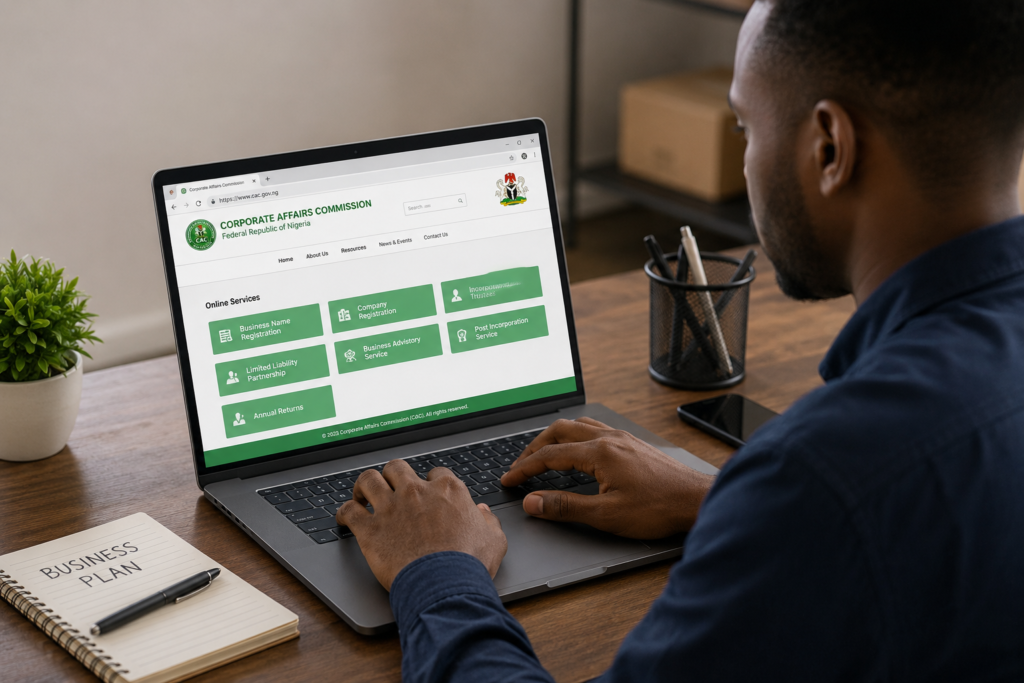
Table of Contents
- What Is CAC and Why Does It Matter?
- Types of Business Registration in Nigeria
- Why You Should Register Your Business With CAC
- What You Need Before You Start
- Step-by-Step Guide: How to Register Your Business With CAC
- How Much Does CAC Registration Cost?
- What to Do After Registering Your Business
- How to Track Sales and Profit After CAC Registration
- Frequently Asked Questions
- Conclusion
What Is CAC and Why Does It Matter?
The Corporate Affairs Commission (CAC) is the Nigerian government body responsible for registering businesses and companies. When you register with CAC, your business becomes a recognised legal entity. This means the government knows your business exists, and you are protected by Nigerian law.
Think of it like this: before you registered, your business only existed in your head and in the minds of your customers. After registration, it exists on paper — officially, legally, and permanently.
Many Nigerian small business owners delay registration because they think it is only for big companies. That is a mistake. Even a local market trader or a one-person fashion business can — and should — register with CAC.
Types of Business Registration in Nigeria
Before you begin registering your business with CAC, you need to know which type of registration is right for you. There are three main options:
1. Business Name (Sole Proprietorship or Partnership)
This is the most popular option for small business owners. If you are a single person running a business, you register as a sole proprietorship. If you are running it with one or more partners, you register as a partnership. This is the cheapest and fastest option.
2. Limited Liability Company (LLC)
This is best for businesses that want to raise capital, get loans from banks, or bring in investors. A Limited Liability Company separates your personal assets from your business assets. If the business runs into debt, your personal property is protected.
3. Incorporated Trustees (for NGOs and Associations)
This is for non-profit organisations, religious bodies, and associations. If you are running a business for profit, this option does not apply to you.
For most Nigerian SME owners reading this guide, Business Name registration is the right place to start. It is affordable, fast, and gives you the official recognition you need.
Why You Should Register Your Business With CAC
A lot of traders ask: “I am already making money, why do I need CAC?” That is a fair question. But consider what you are missing without registration:
- Access to business loans and grants: Most Nigerian banks will not open a business account for you without a CAC registration certificate. Government grants and loans like those from the Bank of Industry (BOI) also require it. According to the Bank of Industry Nigeria, registered businesses have a significantly higher chance of qualifying for funding.
- Bigger contracts and clients: Corporate companies and government agencies cannot pay an unregistered business. If you want to supply to bigger organisations or win tenders, CAC registration is compulsory.
- Brand protection: When you register your business name with CAC, no one else in Nigeria can legally operate under that name. Your brand is protected.
- Customer trust: Customers — especially those buying online — are more likely to trust a business with a CAC registration number. It signals that you are serious and legitimate.
- Tax compliance: Once registered, you can obtain a Tax Identification Number (TIN) and file your taxes properly. This protects you from penalties and opens more financial doors.
- Ability to sue and be sued: A registered business can take legal action to protect itself. An unregistered business has no legal standing in court.
In short, registering your business with CAC is not an expense — it is an investment in your business’s future. It opens doors that are permanently closed to unregistered traders.
What You Need Before You Start
Before you begin the CAC registration process, gather the following documents and information:
- A valid means of identification (National ID, International Passport, Driver’s Licence, or Voter’s Card)
- Your personal information: full name, date of birth, phone number, email address
- Your proposed business name (you will need to suggest 2 to 3 options in case your first choice is taken)
- Your business address
- Nature of business (what your business actually does)
- Your signature (for the online form)
- A valid email address you have access to
- Payment method — a debit card or bank transfer for paying the registration fee
If you are registering as a partnership, you will also need the same information for each partner, and all partners must sign the registration form.
Step-by-Step Guide: How to Register Your Business With CAC
The good news is that registering your business with CAC is now fully online. You no longer need to visit a CAC office. Here is how to do it from your phone or laptop:
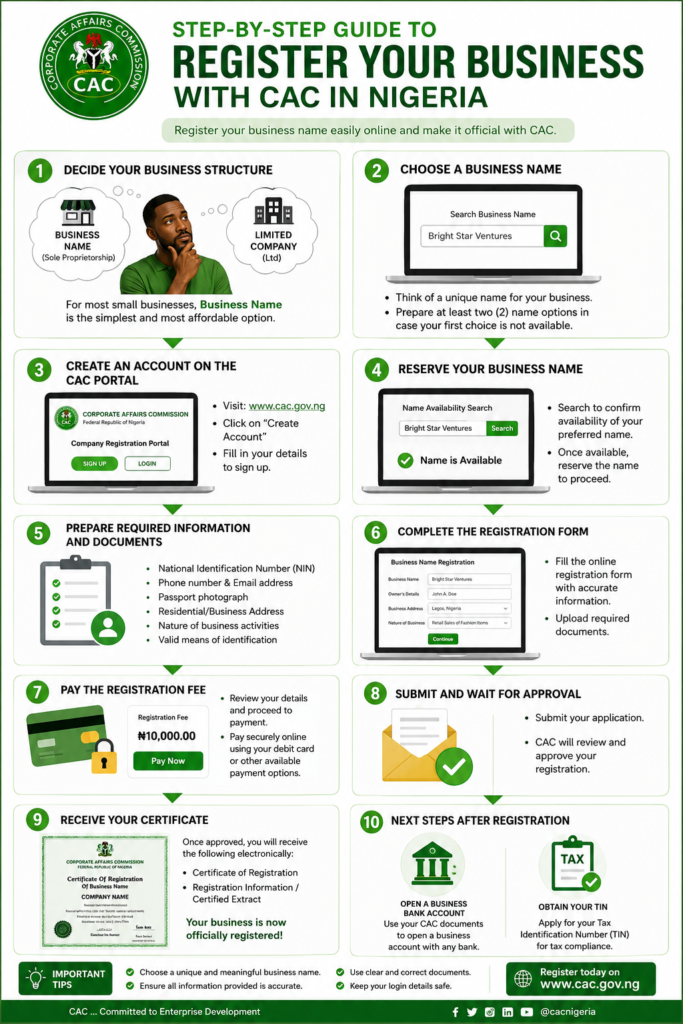
Step 1: Visit the CAC Online Portal
Go to the official CAC website at www.cac.gov.ng and click on the “Start Registration” or “Public Search” button. You will be directed to the CAC e-Registration portal.
Step 2: Create an Account
If you are new to the portal, register as a user first. Enter your email address, create a password, and verify your email. This is your CAC account — keep the login details safe.
Step 3: Search for Your Business Name
Before you fill the main registration form, search for your desired business name. This checks whether the name is already taken. If your first choice is unavailable, try your second or third option. Make sure the name is unique and reflects what your business does.
Step 4: Reserve Your Business Name
Once you find an available name, click “Reserve Name.” You will pay a small name availability search fee at this stage. After successful payment, your name is reserved for a limited period while you complete the full registration.
Step 5: Complete the Registration Form
Fill in all required details — your business name, business address, nature of business, your personal information, and any partner information if applicable. Upload your identification documents where required.
Step 6: Pay the Registration Fee
After filling in the form, proceed to payment. You can pay using your debit card, internet banking, or USSD. The system generates a payment reference for your records. Keep this safe.
Step 7: Download Your Certificate
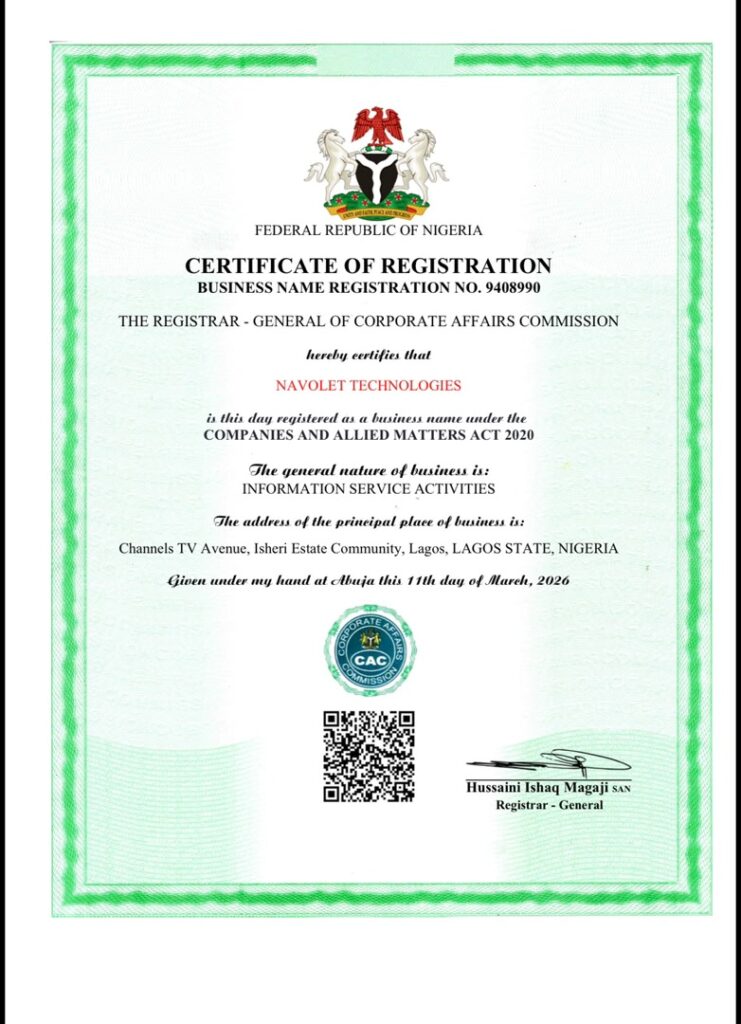
After payment is confirmed and your application is approved — which usually takes between 24 to 72 hours — you will receive your Certificate of Registration and a certified true copy of your registration details. These can be downloaded directly from the portal.
That is it. Your business is now officially registered with CAC. Well done — you are now a legitimate Nigerian business owner.
How Much Does CAC Registration Cost?
The cost of registering a Business Name with CAC depends on your share capital (for companies) or is a flat fee for business names. As of 2026, the approximate fees are:
- Business Name registration: approximately ₦10,000 – ₦15,000 (inclusive of government fees)
- Limited Liability Company (LLC): fees vary based on share capital, typically starting from ₦30,000 and above
- Name availability search: a small fee, usually around ₦500 – ₦1,000
Note that if you use a CAC-accredited agent or legal firm to help you, they will charge a service fee on top of the government fees. However, using the portal yourself is entirely possible and saves you money.
Always verify current fees directly on the CAC official website as they are subject to change.
What to Do After Registering Your Business
Registering with CAC is the beginning, not the end. Here is what you should do immediately after you receive your certificate:
1. Get Your Tax Identification Number (TIN)
Visit the Federal Inland Revenue Service (FIRS) website at www.firs.gov.ng to register for a TIN. This is free and is required for paying taxes, opening a business bank account, and applying for government contracts.
2. Open a Business Bank Account
Separate your personal money from your business money immediately. Take your CAC certificate and TIN to any bank to open a business account. This is one of the most important financial habits you can build — and it also makes it much easier to track your actual business profit.
3. Start Keeping Proper Business Records
This is where many Nigerian small business owners fall short. They get registered, open a bank account — and then continue managing their business with a notebook and memory. That is a recipe for confusion, lost money, and zero clarity on your actual profit.
The good news? You do not need expensive accounting software or a degree in finance to fix this. We will explain how in the next section.
4. Register Your Business on Google
Create a free Google Business Profile at business.google.com. This helps local customers find your business online and gives your brand more credibility.
5. Renew Your Registration
Business Name registrations in Nigeria must be renewed periodically. Set a reminder so your registration does not lapse. Failure to renew can result in penalties or the loss of your business name.
How to Track Sales and Profit After CAC Registration

Here is a truth that many business owners discover too late: registering your business does not automatically make it profitable. Many traders get their CAC certificate, feel accomplished — and then continue operating with no clear picture of whether they are actually making money.
You could be processing hundreds of thousands of naira in sales every month and still be losing money. Why? Because without proper records, you cannot separate your business expenses from your personal expenses. You cannot tell which products make you the most profit. You cannot see which customers owe you money.
This is exactly the problem that Navolet solves.
What Is Navolet?
Navolet is an AI-powered business management tool that works entirely through WhatsApp and Telegram — no app to download, no complicated software to learn. You simply send a message to the Navolet bot and it handles your business records for you.
For a newly registered business owner, Navolet is the perfect next step. After getting your CAC certificate, the most important thing is to start building clean financial records from day one. Navolet makes that effortless.
What Navolet Does for Your Registered Business
- Records every sale and calculates your daily profit automatically
- Tracks which customers owe you money (credit and debt management)
- Manages your inventory and alerts you when stock is running low
- Creates professional PDF invoices with your business logo and bank details
- Separates your business expenses from personal expenses — which is critical for your tax calculations
- Generates tax estimates in line with Nigerian tax law (Personal Income Tax and VAT)
- Sends you a full business report every evening at 9PM so you always know where you stand
Once you have a CAC-registered business name, Navolet even helps you send invoices that carry your business name — giving your customers a professional impression from day one.
See all plans and features on the Navolet pricing page, or start immediately on the Navolet start page.
Why Business Records Matter for Your CAC-Registered Business
After registration, the Nigerian government expects you to file tax returns. If you have no records, you are guessing — and guessing can lead to overpaying tax or underpaying and facing penalties. With Navolet, your records are automatically kept every day, and you can export a full tax report at any time.
The Navolet FAQ page answers common questions about how the tool works. And if you have more questions, you can reach the support team at any time.
Frequently Asked Questions About Registering Business With CAC
How long does CAC registration take in Nigeria?
Business Name registration typically takes between 24 and 72 hours after your payment is confirmed and your documents are approved. In some cases it may take up to 5 working days.
Can I register a business with CAC online without visiting their office?
Yes. The entire process for Business Name registration is available online at the CAC e-Registration portal. You do not need to visit a CAC office unless you encounter a specific issue that requires in-person resolution.
Do I need a lawyer to register my business with CAC?
No. You can complete Business Name registration yourself using the CAC portal. However, for Limited Liability Company registration, it is advisable to use a lawyer or CAC-accredited agent, as the process is more complex.
What if my proposed business name is already taken?
If your first choice is unavailable, try a variation. You could add a location, a descriptor, or a different word. For example, if “Sunshine Foods” is taken, try “Sunshine Foods Lagos” or “Sunshine Foods Nigeria” — as long as it is meaningfully different.
Can an unregistered business open a business bank account?
No. Nigerian banks require a CAC registration certificate before they will open a dedicated business bank account. This is another strong reason to register as soon as possible.
Is it compulsory for small businesses to register with CAC?
The law requires any business operating under a name other than the owner’s legal name to be registered. Beyond legal compliance, the practical benefits — access to loans, brand protection, customer trust — make registration essential for any serious business.
What happens after I register with CAC?
After registration, you should get your Tax Identification Number (TIN), open a business bank account, and start keeping proper records of your sales, expenses, and inventory. Tools like Navolet make this easy — all through WhatsApp, with no app download needed.
How do I track my business profit after CAC registration?
The simplest way is to use a dedicated business management tool. Navolet works entirely through WhatsApp and Telegram — you just send a message to record a sale or expense, and the system handles everything else, including daily profit reports.
Conclusion
Registering your business with CAC is one of the smartest decisions you can make as a Nigerian entrepreneur. It gives your business a legal identity, protects your brand, opens the door to funding and bigger clients, and positions you as a serious player in the Nigerian market.
The process is simpler than most people think — it is fully online, relatively affordable, and can be completed in a few days. There is no good reason to keep putting it off.
However, remember that registration is just the first step. The businesses that truly succeed are the ones that combine legal recognition with proper financial management — tracking every naira that comes in and goes out, knowing their daily profit, and staying on top of customer debts and inventory.
That is the combination that turns a registered business into a profitable one.
Start Managing Your Business Like a Pro — For Free
You have done the hard part of registering your business. Now it is time to build the financial habits that will make it grow.
Navolet is free to start — no app to download, no complicated setup. Just send a message on WhatsApp and you are recording your first sale in under two minutes. Track your daily profit, manage your stock, send professional invoices with your registered business name, and never lose track of what customers owe you.
Over 1,000 Nigerian business owners already use Navolet to run smarter businesses.
Start Your Free Navolet Account on WhatsApp →
Or explore the full list of features and plans on the Navolet pricing page.